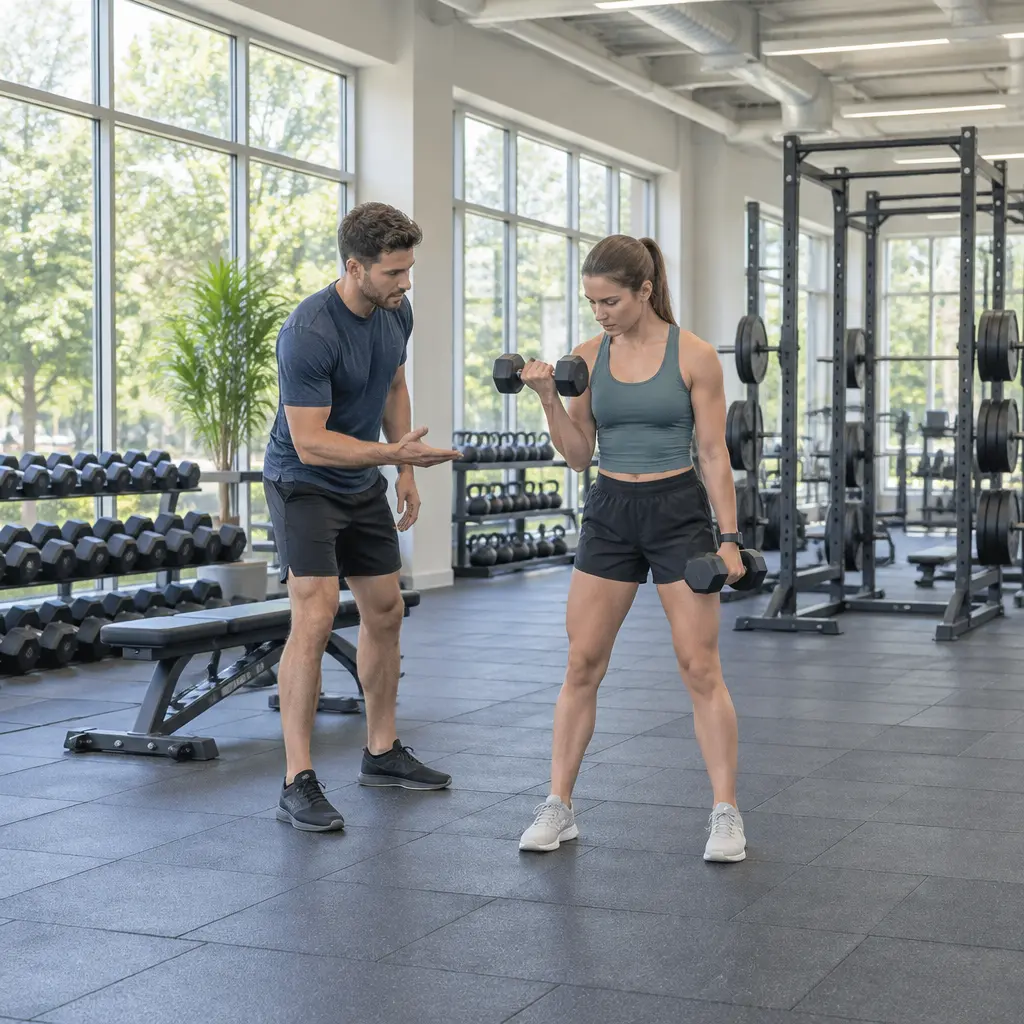
Personal training is individualized fitness coaching that helps people turn broad intentions—such as getting stronger, improving endurance, or losing weight—into a structured, adaptable plan. A qualified trainer can assess starting ability, tailor exercise, teach safe technique, and provide accountability. These supports matter: the World Health Organization estimates that 31% of adults worldwide did not meet recommended physical-activity levels in 2022, while U.S. guidelines call for at least 150 minutes of moderate-intensity aerobic activity each week plus muscle-strengthening activity on two days. Personal training can help bridge the gap between those recommendations and everyday routines through goal setting, progressive programming, feedback, and long-term habit building.
Personal Training Builds a Goal-Focused Fitness Plan
A personal training plan is a tailored sequence of exercise, instruction, and progress checks designed around a person’s goals, health history, preferences, and current abilities. The American College of Sports Medicine’s exercise-testing and prescription guidance emphasizes that exercise programming should be individualized, with factors such as health status, fitness, goals, and available resources informing the plan. This distinguishes personal training from simply following a generic workout: the trainer adjusts the method as the client’s needs and capabilities change.
Personal training can support several related goals, including strength development, cardiovascular fitness, mobility, sport performance, and weight management. A good plan identifies what progress means, chooses appropriate activities, and sets a realistic way to measure change. The following components help turn that plan into consistent action.
Assessment and realistic goal setting
An initial assessment establishes a useful starting point. Depending on the setting and the client’s needs, it may cover activity history, movement ability, basic fitness measures, preferences, schedule, and relevant health considerations. Trainers can use this information to set specific, measurable, achievable, relevant, and time-bound goals—for example, completing three brisk walks per week or gradually increasing a strength exercise’s load.
Assessment should be appropriate to the trainer’s qualifications and scope of practice. Trainers do not diagnose medical conditions or replace clinicians; clients with symptoms, significant health conditions, or questions about exercise safety should consult a healthcare professional. A clear baseline makes progress easier to evaluate without relying solely on scale weight or appearance.
Progressive programming
Progressive programming means gradually adjusting exercise demands as a person adapts. A trainer may change resistance, repetitions, duration, pace, exercise complexity, or recovery time. This approach helps match the challenge to the client rather than making every session maximally difficult. It also provides a practical way to work toward public-health targets: the U.S. Physical Activity Guidelines recommend adults accumulate 150 to 300 minutes of moderate-intensity aerobic activity weekly, or an equivalent amount of vigorous activity, alongside muscle strengthening on at least two days.
The appropriate starting dose may be lower for someone who has been inactive. The Centers for Disease Control and Prevention advises that adults can begin with manageable amounts and build toward the recommended level; some activity is better than none. A trainer can help divide a larger goal into attainable weekly steps and adjust the plan when recovery, time, or motivation becomes a barrier.
Progress tracking and plan adjustments
Progress tracking uses consistent measures to show whether a plan is working. Depending on the goal, useful indicators may include workout attendance, walking time, exercise repetitions, resistance used, balance, or a standardized fitness test. The trainer and client can review these markers periodically and revise the program when progress stalls or circumstances change.
Tracking is most useful when it supports informed decisions rather than perfectionism. Fitness changes can be uneven, and day-to-day performance is affected by sleep, stress, illness, and other factors. A trainer can interpret the broader pattern, celebrate meaningful improvements, and keep short-term fluctuations in perspective.
Personal Training Improves Exercise Quality and Confidence
A goal-focused plan is only useful when exercises are performed in a way that suits the client. Personal training adds instruction and feedback, helping people learn movement skills, select suitable variations, and gain confidence using equipment. This is especially helpful for beginners, people returning after a break, and clients who feel uncertain in a gym environment.
Technique coaching and exercise modifications
Technique coaching is real-time instruction that helps a client understand how to perform an exercise and adapt it to their ability. A trainer may demonstrate a movement, give concise cues, and offer a simpler or more challenging variation. For example, a squat can be modified by using a chair for support or progressed by adding resistance when the client is ready.
Good coaching is not a guarantee against injury, but it can help clients make informed choices about load, range of motion, and exercise selection. The American College of Sports Medicine recommends that exercise be prescribed with attention to individual characteristics and appropriate progression. If pain, dizziness, or unusual symptoms occur, the session should be stopped and medical guidance sought when appropriate.
Motivation, accountability, and adherence
Accountability is the structure created by scheduled sessions, agreed actions, and regular check-ins. A trainer can help clients identify obstacles, plan around busy weeks, and reconnect with their reasons for exercising. This matters because the World Health Organization reports that insufficient physical activity remains common globally, with 31% of adults not meeting recommended activity levels in 2022.
A trainer should support autonomy rather than make exercise dependent on supervision. Skills, confidence, and a realistic routine can help clients continue on their own between sessions. The goal is not merely to attend appointments, but to develop sustainable activity habits that fit everyday life.
Different formats for different needs
Personal training may be delivered one-to-one, in a small group, or remotely. One-to-one sessions allow close attention and rapid adjustments; small-group training can offer social support at a lower cost; and online coaching can provide flexibility for people with travel or scheduling constraints. The best format depends on the client’s preferences, access, budget, and need for direct supervision.
Whichever format is chosen, clients should look for a trainer with a recognized qualification, relevant experience, clear communication, and appropriate professional boundaries. For online coaching, a trainer should explain how exercises will be demonstrated, how feedback will be provided, and what to do if an exercise causes pain or feels unsafe.
Personal Training Supports Sustainable Results
Fitness goals are more likely to last when the plan can adapt to real life. Personal training can connect exercise to practical routines, recovery, and independent skill-building instead of treating each workout as an isolated effort. Its value is not limited to a short-term result: regular physical activity is associated with important health benefits across the lifespan.
Building habits beyond the session
Habit building means making activity repeatable through cues, scheduling, and achievable actions. A trainer might help a client choose consistent workout days, prepare an at-home alternative, or set a minimum session for especially busy periods. These strategies protect continuity when motivation or circumstances fluctuate.
The CDC notes that regular physical activity can improve health and reduce the risk of several chronic conditions. Its guidance also emphasizes that activity can be accumulated in ways that suit an individual’s schedule and abilities. A trainer can therefore help translate general recommendations into a routine that is realistic rather than intimidating.
Recovery, flexibility, and long-term progression
Recovery is the process of allowing the body to adapt between exercise sessions. Training plans may account for rest, sleep, varying workout intensity, and changes in workload. When life interrupts a routine, flexibility—such as substituting a walk for a missed gym session—can prevent an all-or-nothing response.
Long-term progress is not always a straight line. A skilled trainer can help distinguish a normal plateau from a need to adjust the plan, while encouraging clients to value improvements in strength, energy, function, or consistency as well as changes in body composition. The broader aim is a sustainable relationship with movement.
Choosing a trainer and getting started
Before hiring a trainer, ask about credentials, experience with your goals, assessment practices, session structure, and how progress will be reviewed. Discuss any relevant medical advice, previous injuries, accessibility needs, and preferred communication style. A trial consultation can help determine whether the trainer listens carefully and explains the plan clearly.
Begin with one concrete goal and a schedule you can maintain. Agree on how success will be measured, review the plan regularly, and ask for alternatives when an exercise or routine does not fit. If the trainer’s approach feels unsafe, dismissive, or outside their professional scope, seek another qualified provider.
Conclusion: Turn Fitness Goals Into Consistent Action
Personal training helps make fitness goals more achievable by combining individualized assessment, progressive programming, technique coaching, accountability, and ongoing adjustments. These elements can make exercise safer to learn, easier to sustain, and more relevant to a person’s daily life. With 31% of adults worldwide not meeting activity recommendations in 2022, support that turns broad guidance into practical habits has clear relevance.
To get started, define one meaningful goal, find a qualified trainer whose approach fits your needs, and agree on a realistic plan with regular progress reviews. For additional guidance, consult the World Health Organization’s physical-activity recommendations, the U.S. Physical Activity Guidelines, and advice from a healthcare professional when health conditions or symptoms require it.
Sources: World Health Organization, Physical activity fact sheet, https://www.who.int/news-room/fact-sheets/detail/physical-activity; U.S. Department of Health and Human Services, Physical Activity Guidelines for Americans, 2nd edition, https://health.gov/our-work/nutrition-physical-activity/physical-activity-guidelines/current-guidelines; Centers for Disease Control and Prevention, Benefits of Physical Activity, https://www.cdc.gov/physical-activity-basics/benefits/index.html; American College of Sports Medicine, ACSM’s Guidelines for Exercise Testing and Prescription, 11th edition, https://www.acsm.org/education-resources/books/guidelines-exercise-testing-prescription