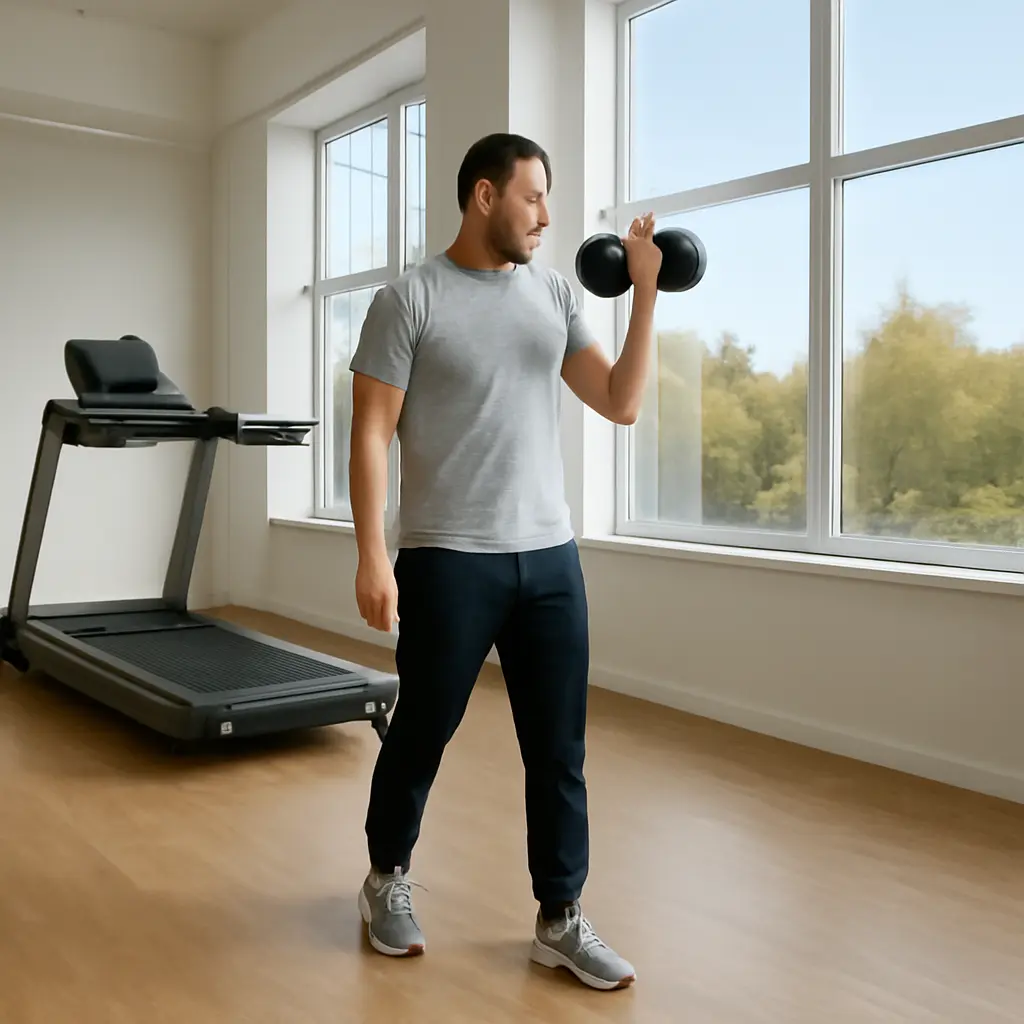
Strength training and fat loss go hand in hand: for a beginner, lifting weights is usually a better foundation than trying to lose fat through endless cardio. Resistance training helps preserve or build muscle while weight is lost, and cardio supports heart health and increases energy use. The most effective plan is typically a manageable combination of strength training, everyday movement, and a sustainable calorie deficit—not choosing one form of exercise and doing it without limit. The CDC recommends at least 150 minutes of moderate-intensity aerobic activity and muscle-strengthening activity on two or more days each week for adults; those are health guidelines, not a guarantee of weight loss.
What Strength Training Means for Fat Loss
Strength training, also called resistance training, is exercise in which muscles work against an external resistance, such as dumbbells, machines, resistance bands, or body weight. The American College of Sports Medicine describes resistance exercise as a way to improve muscular strength, endurance, and function. For someone losing weight, its distinctive value is helping maintain muscle and strength during the process—not producing rapid fat loss on its own.
The scale measures total body weight, not body composition. A person can lose fat while retaining or gaining some muscle, so changes in waist measurement, clothing fit, strength, and health markers can help tell a fuller story than scale weight alone. Results vary with training history, diet, sleep, health, and the size of the calorie deficit.
Muscle preservation during weight loss
Muscle preservation means limiting the loss of lean tissue while reducing body fat. A systematic review and meta-analysis published in the journal Obesity Reviews found that adding resistance exercise to dietary weight-loss programs helped protect fat-free mass and improve strength, even when it did not substantially change total weight loss. This distinction matters: a workout can improve the quality of weight lost without making the scale fall faster.
For beginners, progressive training means starting with movements they can perform safely, then gradually increasing repetitions, resistance, or difficulty as they adapt. It does not mean lifting as heavily as possible or training to exhaustion every session.
Strength, function, and body composition
Body composition refers to the proportions of fat mass and fat-free mass in the body. Resistance training can improve muscular strength and everyday function while supporting body composition during weight loss. The U.S. Physical Activity Guidelines recommend muscle-strengthening activity involving all major muscle groups on at least two days a week. A beginner can meet that target with full-body sessions spread across the week.
What Cardio Contributes to Fat Loss
Cardio, or aerobic activity, is sustained movement that raises heart and breathing rates, such as brisk walking, cycling, swimming, or dancing. It can increase energy expenditure and improve cardiovascular fitness, but its effect on body fat depends on the overall balance between energy consumed and energy used. The CDC notes that physical activity contributes to weight management, while food intake and activity together determine the calorie balance that influences weight.
“Endless cardio” is not required. Exercise estimates of calories burned can be imprecise, and increased appetite or reduced movement later in the day may offset some of the energy used during a workout. Cardio remains valuable, but making sessions longer and longer is not automatically a more effective or sustainable fat-loss strategy.
Moderate-intensity aerobic activity
Moderate-intensity activity raises the heart rate while still allowing a person to talk, though not sing comfortably. Examples include brisk walking and recreational cycling. The CDC’s baseline recommendation for adults is at least 150 minutes a week of moderate-intensity aerobic activity, or 75 minutes of vigorous activity, or an equivalent combination. More activity may offer additional health benefits, but beginners should build up gradually.
Walking and everyday movement
Walking is a practical form of low-impact cardio that can be fitted into daily life. Short walks, active errands, and taking stairs can increase movement without requiring long gym sessions. The best amount is the amount a person can maintain comfortably and safely; step counts can be useful for tracking personal progress, but there is no universal step target that guarantees fat loss.
How Beginners Can Combine Lifting and Cardio
A balanced beginner plan pairs regular resistance training with cardio and a sustainable eating pattern. The CDC’s activity recommendations provide a useful health baseline, while the precise schedule should reflect a person’s current fitness, preferences, access to equipment, and any medical considerations.
A manageable weekly starting point
A practical example is two full-body strength sessions on nonconsecutive days, plus several brisk walks that gradually build toward the aerobic guideline. A session might include a squat or chair sit-to-stand, a hip-hinge movement, a push, a pull, and a core exercise. Start with a load that allows controlled technique and stop if pain, dizziness, or unusual symptoms occur. This is an example, not a requirement or individualized prescription.
Progression, recovery, and consistency
Progression is a gradual increase in training challenge; recovery is the time and supportive habits that let the body adapt. Beginners generally benefit more from consistent, repeatable sessions than from frequent all-out workouts. Rest days, adequate sleep, and manageable training volume can help reduce soreness and make it easier to keep going. If a workout disrupts daily function or causes persistent pain, reduce the load or seek guidance from a qualified professional.
Nutrition and Measuring Progress
A calorie deficit—using more energy than is consumed over time—is central to fat loss, but it need not involve extreme restriction. The CDC emphasizes gradual, steady weight loss as more likely to be maintained than rapid loss. Food choices that support adequate nutrition, including protein-containing foods, vegetables, fruits, and other minimally processed options, can make a plan more satisfying. People with medical conditions, a history of disordered eating, or medication-related concerns should consult a healthcare professional before making major diet or exercise changes.
Track more than scale weight. Consider a trend in body weight over several weeks, waist measurement, strength, walking tolerance, energy, and how clothes fit. Daily weight can fluctuate because of water, food, and other factors; a single reading cannot establish whether fat loss has occurred. A simple progress chart could show weekly average weight alongside waist measurement and training performance, helping distinguish short-term fluctuations from longer-term patterns.
Conclusion: Choose a Sustainable Combination
For a newbie trying to lose fat, lifting weights is a strong foundation because it builds strength and helps preserve lean mass during weight loss. Cardio contributes to cardiovascular health and activity levels, but endless sessions are unnecessary. Combine beginner-appropriate strength work, enjoyable aerobic activity, everyday movement, and a sustainable calorie deficit; then judge progress by health, function, and longer-term trends as well as the scale. Start modestly, increase activity gradually, and seek qualified medical or fitness advice when personal circumstances call for it.
Sources: Centers for Disease Control and Prevention, Physical Activity Basics, https://www.cdc.gov/physical-activity-basics/guidelines/adults.html; Centers for Disease Control and Prevention, Physical Activity and Your Weight and Health, https://www.cdc.gov/healthy-weight-growth/physical-activity/index.html; Centers for Disease Control and Prevention, Steps for Losing Weight, https://www.cdc.gov/healthy-weight-growth/losing-weight/index.html; U.S. Department of Health and Human Services, Physical Activity Guidelines for Americans, 2nd edition, https://health.gov/sites/default/files/2019-09/Physical_Activity_Guidelines_2nd_edition.pdf; Bellicha A. et al., “Effect of exercise training on weight loss, body composition changes, and weight maintenance in adults with overweight or obesity: An overview of 12 systematic reviews and 149 studies,” Obesity Reviews, https://doi.org/10.1111/obr.13256; American College of Sports Medicine, Progression Models in Resistance Training for Healthy Adults, https://doi.org/10.1249/MSS.0b013e3181915670.